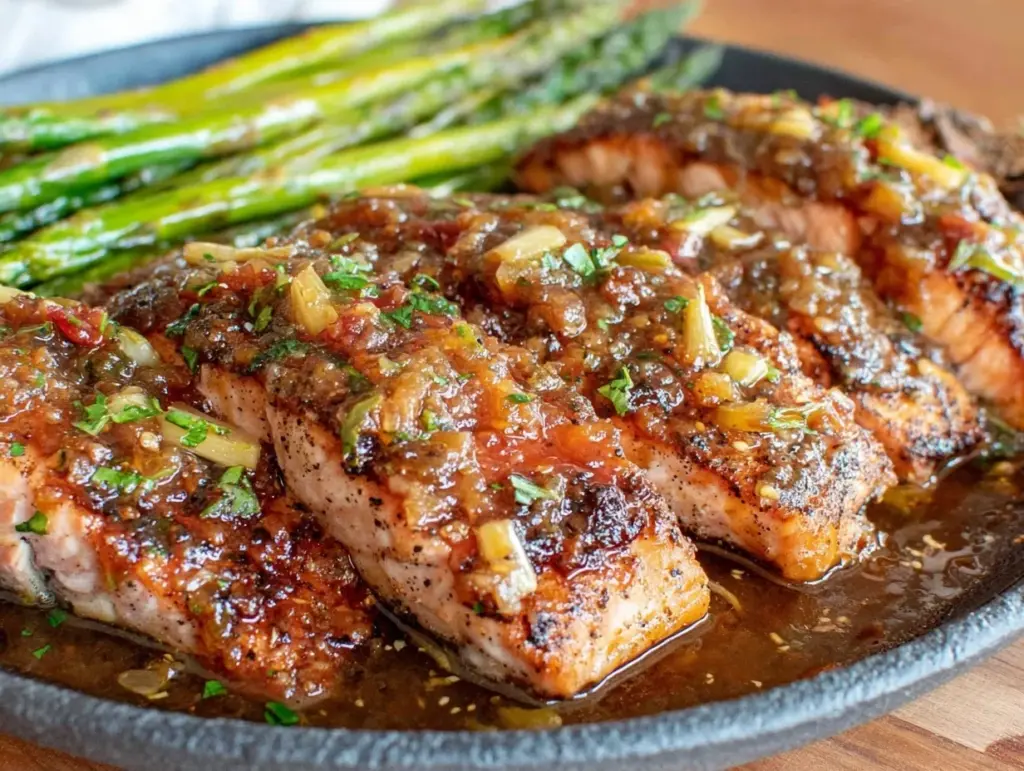
It was 4:45 PM on a Tuesday, and I was staring at the clock with that specific kind of dread that only a working parent knows. The kids were already home, the house was a disaster zone of scattered Lego bricks and half-finished homework, and my energy levels were hovering somewhere between “zombie” and “do not speak to me.” I opened the fridge. Inside sat two lonely salmon fillets, a limp bunch of asparagus, and a jar of honey that I’d been meaning to use for months.
I could have ordered takeout. I could have made grilled cheese. But I’m terrible at takeout—it’s expensive, it’s greasy, and it always arrives lukewarm. So I threw the salmon and asparagus onto a single baking sheet, drizzled them with a quick honey-garlic sauce, and shoved them into the oven. Twenty minutes later, I pulled out a meal that smelled like a fancy restaurant but looked like something I threw together in ten minutes flat.
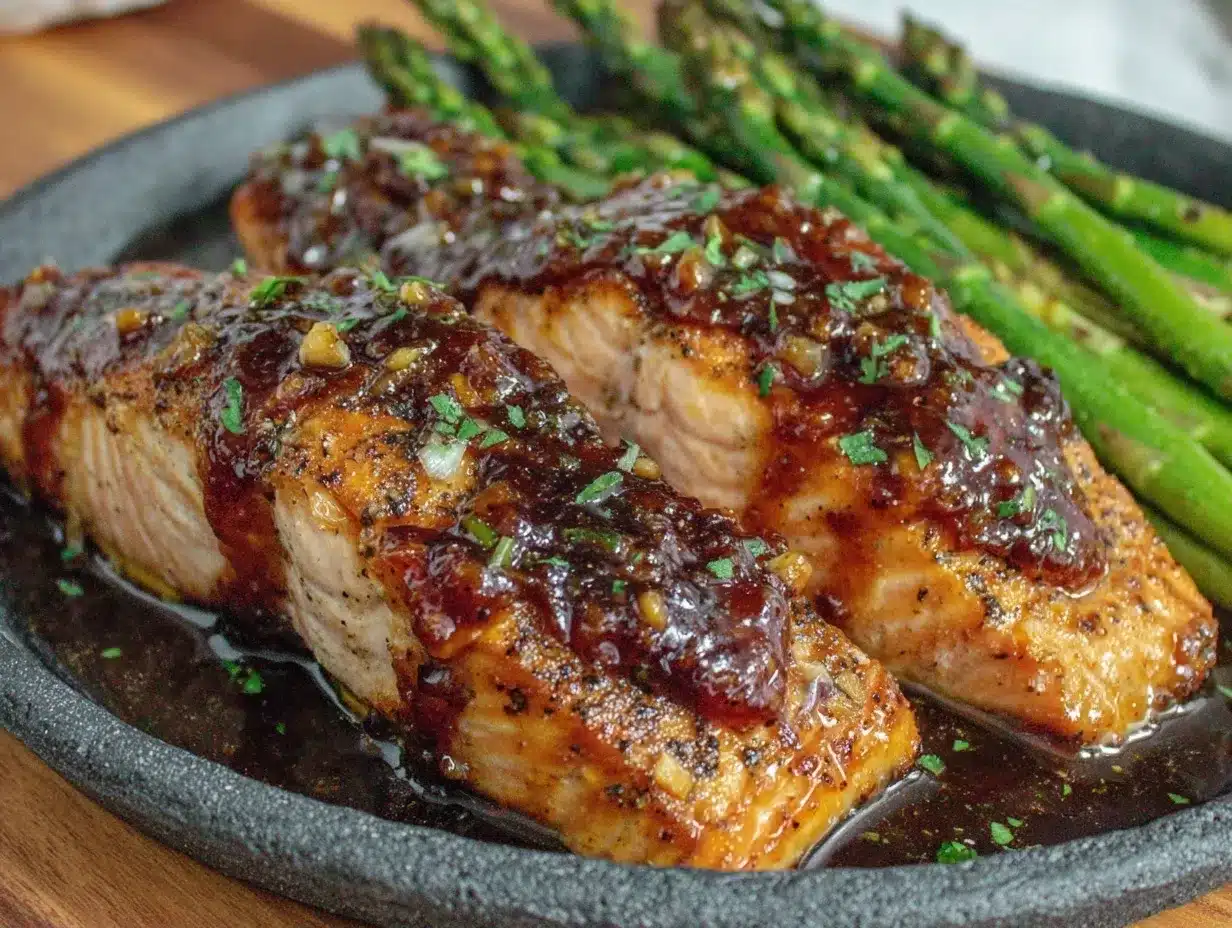
This one-pan honey garlic salmon with roasted asparagus has become my emergency button for those chaotic evenings. It’s sweet, savory, slightly sticky, and incredibly healthy. Best part? There’s basically zero cleanup. Just one pan, one bowl for the sauce, and done. If you’re wondering how to make a weeknight dinner that feels special without the stress, this is it. I’ve made this one-pan honey garlic salmon at least once a week for the last month, and honestly? It’s never failed me.
Why You’ll Love This One-Pan Dinner
Look, I don’t have time for complicated recipes with twenty ingredients and three different pans. I need dinner to just work. This honey garlic salmon is the answer to my prayers for several reasons:
- Stupid Simple Setup — Seriously. You mix the sauce, dump the fish and veggies on a sheet, and bake. That’s it. I’ve made this while holding a baby and answering emails. It’s that forgiving.
- Under 30 Minutes — From pulling out the ingredients to plating, it takes about 25 minutes. Ten minutes of prep, fifteen minutes of hands-off baking. Perfect for when you walk in the door at 5:30 PM.
- One Pan, Zero Guilt — The cleanup is a joke (in a good way). Just throw the baking sheet in the dishwasher. No scrubbing pots, no washing bowls. My husband thinks I’m a genius because of this alone.
- Restaurant-Quality Flavor — The honey-garlic glaze caramelizes in the oven, creating a sticky, savory-sweet coating that sticks to the salmon and makes the asparagus taste incredible. It’s way better than the generic “honey garlic chicken” at your local takeout spot.
- Healthy But Not Boring — It’s packed with protein and veggies, but it doesn’t taste like “diet food.” The rich sauce makes you feel like you’re cheating, even though it’s actually pretty nutritious.
This is my go-to when I need dinner to just work. No complicated techniques, no weird ingredients, just reliable, delicious food that makes everyone happy.
Ingredients You’ll Need
Here’s the best part: you probably have most of this already. The sauce is pantry-staple friendly, and the rest is just fresh fish and green veggies. I’m particular about a few things here, so pay attention to the tips!
For the Salmon & Asparagus
Salmon fillets (2 large, about 6-8 oz each / 170-225g) — Look for fillets that are roughly the same thickness so they cook evenly. Wild-caught is nicer, but farmed works too. Just make sure it’s fresh and smells clean, not fishy.
Asparagus (1 bunch / about 300g) — Medium thickness is best. Too thin and they’ll burn; too thick and they’ll be raw inside the baking time. Snap off the woody ends before you start. Trust me, nobody likes a woody bite.
Olive oil (2 tablespoons / 30ml) — Use your good stuff. It coats the veggies and helps the glaze stick.
Salt and black pepper — For seasoning the salmon and veggies before baking. Don’t skip this!
For the Honey Garlic Sauce
Honey (¼ cup / 60ml) — Yes, a quarter cup. This is a sweet glaze, so don’t skimp. If you’re watching sugar, you can reduce to 2 tablespoons, but you’ll miss that sticky caramelization.
Soy sauce (2 tablespoons / 30ml) — Regular soy sauce is fine, but tamari if you’re going gluten-free. It adds the salty, umami depth that balances the honey.
Garlic (4 cloves, minced / about 2 tablespoons) — Fresh only. Please, for the love of all that is holy, do not use jarred garlic for this. The flavor is just too sharp and metallic. Fresh garlic melts into the sauce beautifully.
Ginger (1 teaspoon, freshly grated / or ½ teaspoon ground) — Fresh grated ginger is ideal. It adds that bright, zesty kick that makes honey garlic sauce pop. If you don’t have fresh, ground works, but add it at the end of cooking the sauce if possible.
Rice vinegar (1 teaspoon / 5ml) — This is the secret weapon. It cuts through the sweetness and adds a little tang. You can skip it if you’re in a huge rush, but I highly recommend it.
Red pepper flakes (½ teaspoon, optional) — For a little heat. I always add this because I like a little kick to balance the sweet honey.
Cornstarch (1 teaspoon / 5g) — This is what thickens the sauce so it clings to the fish instead of running off. Mix it with a teaspoon of cold water to make a slurry.
Equipment Needed
You don’t need fancy equipment for this. Here’s what I actually use:
Large baking sheet — I use a standard half-sheet pan. If you have small fillets, a quarter sheet works, but don’t crowd them. Space is key for roasting.
Small bowl — For whisking the sauce. Any small bowl will do.
Whisk or fork — To mix the sauce until smooth.
Pastry brush — Optional, but helpful for brushing the glaze on. I just use a spoon if I’m being lazy.
Parchment paper or foil — For lining the pan. This is non-negotiable for easy cleanup. I use parchment because it doesn’t stick, even with sticky honey.
How to Make It: Step-by-Step
Alright, let’s make this! I’m walking you through exactly how I do it, including the little tricks I’ve picked up to ensure perfect results every time.
Step 1: Prep the Oven and Pan (5 minutes)
Preheat your oven to 400°F (200°C). Line a large baking sheet with parchment paper or foil and lightly grease it with olive oil or cooking spray. This ensures nothing sticks and cleanup is a breeze.
Step 2: Prep the Veggies and Fish (5 minutes)
Wash the asparagus and snap off the tough woody ends at the bottom. Cut them in half if they’re very long. Pat the salmon fillets dry with paper towels—this helps the glaze stick better. Place the salmon in the center of the baking sheet and arrange the asparagus around the edges. Season the salmon and asparagus lightly with salt and pepper.
Step 3: Make the Honey Garlic Sauce (2 minutes)
In a small bowl, whisk together the honey, soy sauce, minced garlic, grated ginger, rice vinegar, and red pepper flakes. In a separate tiny bowl, mix the cornstarch with 1 teaspoon of cold water to create a slurry. Whisk this slurry into the honey mixture. The sauce will look thin now, but it will thicken up in the oven.
Step 4: Glaze and Bake (15 minutes)
Brush half of the sauce over the salmon fillets and the other half over the asparagus. Be generous! Slide the pan into the preheated oven and bake for 12-15 minutes. The salmon is done when it flakes easily with a fork and is opaque throughout. The asparagus should be tender-crisp and slightly charred at the tips.
Step 5: Final Glaze and Serve (2 minutes)
Remove the pan from the oven. Brush any remaining sauce from the bowl over the hot salmon and asparagus. The residual heat will finish thickening the glaze. Let it rest for 2 minutes so the sauce sets slightly. Garnish with sesame seeds and sliced green onions if you have them. Serve immediately!
Total Time: About 25 minutes (10 minutes prep, 15 minutes cooking)
Troubleshooting Tips
- Sauce too thin? It might need another 2 minutes in the oven, or you can broil for 1-2 minutes at the end to caramelize it (watch closely so it doesn’t burn!).
- Salmon dry? Check it at 12 minutes. Salmon cooks fast. If it’s done, take it out. Overcooked salmon is rubbery.
- Asparagus burning? If the tips are getting too dark, cover the pan loosely with foil for the last 5 minutes.
Expert Tips & Tricks
Here’s everything I’ve learned from making this dozens of times. These tips will save you from my mistakes.
Pat the Salmon Dry
This is crucial. Wet salmon repels the glaze. If you don’t pat it dry, the sauce will slide off and pool on the pan. Dry fish = sticky fish.
Don’t Crowd the Pan
If your fillets are overlapping, they’ll steam instead of roast. Use two pans if you have to. Space allows for that beautiful caramelization.
Fresh Garlic is Non-Negotiable
I know it’s extra work to mince four cloves, but jarred garlic tastes bitter when roasted. Fresh garlic gets sweet and nutty in the oven. It’s worth the 30 seconds.
Reserve Some Sauce
Brush on half before baking, and save the rest for after. This prevents the first layer from burning and gives you a fresh, glossy finish.
Check for Doneness Early
Salmon continues to cook after you take it out of the oven. If it looks slightly underdone, it’s probably perfect. If it’s opaque all the way through and flaking, it’s done.
Variations & Substitutions
Once you’ve nailed the basic version, here’s how you can mix it up. I’ve tried all of these.
Gluten-Free
Swap regular soy sauce for tamari or coconut aminos. The rest of the ingredients are naturally gluten-free. I use tamari and it tastes identical.
Spicy Honey Garlic
Add 1 teaspoon of sriracha or gochujang to the sauce. It adds a Korean-inspired kick that’s amazing with the honey.
Lemon Herb Twist
Skip the ginger and add 1 tablespoon of lemon juice and 1 teaspoon of dried thyme to the sauce. It’s lighter and fresher.
Vegetarian Option
Swap the salmon for extra-firm tofu. Press the tofu, cut into cubes, and bake for 20-25 minutes. It soaks up the sauce beautifully.
Other Veggies
Broccoli florets or bell pepper strips work great in place of or alongside asparagus. Just chop them to similar sizes so they cook evenly.
Serving & Storage
How to Serve:
I serve this straight from the pan with a side of jasmine rice or quinoa to soak up the extra sauce. It’s also fantastic over cauliflower rice for a low-carb option. A simple side salad with vinaigrette balances the sweetness perfectly.
Leftovers:
Store leftovers in an airtight container in the fridge for up to 3 days. The salmon will keep well, though it’s best eaten cold or at room temperature (like sushi-grade, but cooked!). Reheat gently in the microwave with a splash of water to keep it moist.
Freezing:
I don’t recommend freezing this. The asparagus gets mushy when thawed, and the salmon can become dry. It’s best made fresh.
Nutrition Information
I’m not a nutritionist, but here’s the breakdown if you’re tracking. This is per serving (based on 2 servings with 1 fillet and ½ the asparagus).
| Nutrient | Amount |
|---|---|
| Calories | 380 |
| Protein | 34g |
| Carbs | 22g |
| Fat | 18g |
| Fiber | 3g |
| Sugar | 18g |
What’s Good: High in protein and omega-3s from the salmon. Good amount of fiber from the asparagus. Low in refined carbs.
What to Know: The sugar content comes from the honey. If you’re watching sugar, reduce the honey to 2 tablespoons or use a sugar-free alternative.
Final Thoughts
So that’s my one-pan honey garlic salmon with roasted asparagus! It’s the kind of recipe that saves your evening when you’re tired, hungry, and don’t want to think. It’s sweet, savory, healthy, and ridiculously easy. My kids love it, my husband loves it, and I love that there’s only one pan to wash.
Make it yours! Add more garlic if you’re a garlic lover (I always do). Try different veggies if you don’t like asparagus. The best recipes are the ones you adapt to your family’s tastes.
If you make this, drop a comment and let me know what you think! I love hearing how recipes turn out in your kitchen. And if something doesn’t work, tell me that too—I’m here to help troubleshoot. Happy cooking! And I hope your kitchen smells half as good as mine does right now.
Frequently Asked Questions
Can I use frozen salmon?
Yes, but you must thaw it completely first. Pat it very dry before seasoning. Frozen salmon releases more water, so it’s harder to get that nice glaze. Fresh is always better for this recipe, but frozen works in a pinch.
Why did my sauce run off the salmon?
Usually, this happens if the salmon wasn’t dry enough or if the oven wasn’t hot enough. Make sure you pat the fish dry and preheat your oven fully. The cornstarch helps, but it needs heat to activate. If it’s still runny, broil for 1-2 minutes at the end.
Can I make this in an air fryer?
Absolutely! Cook at 400°F for 8-10 minutes. Check at 6 minutes. The air fryer cooks faster, so keep an eye on it. You might need to brush on the sauce halfway through.
Is this recipe kid-friendly?
Yes! Most kids love the sweet honey flavor. If your kids are sensitive to garlic, you can mince it extra fine or use garlic powder in a pinch. The asparagus is mild and sweet when roasted, so it’s usually a hit.
Can I add other vegetables?
Of course! Broccoli, green beans, snap peas, or bell peppers all work well. Just chop them to similar sizes so they cook at the same rate as the asparagus.
How do I know when the salmon is done?
Use the fork test. Gently press the top of the fillet with a fork. If it flakes easily and feels firm but not hard, it’s done. The internal temperature should be 145°F (63°C), but many chefs prefer 125-135°F for a moister texture.
Pin This Recipe!
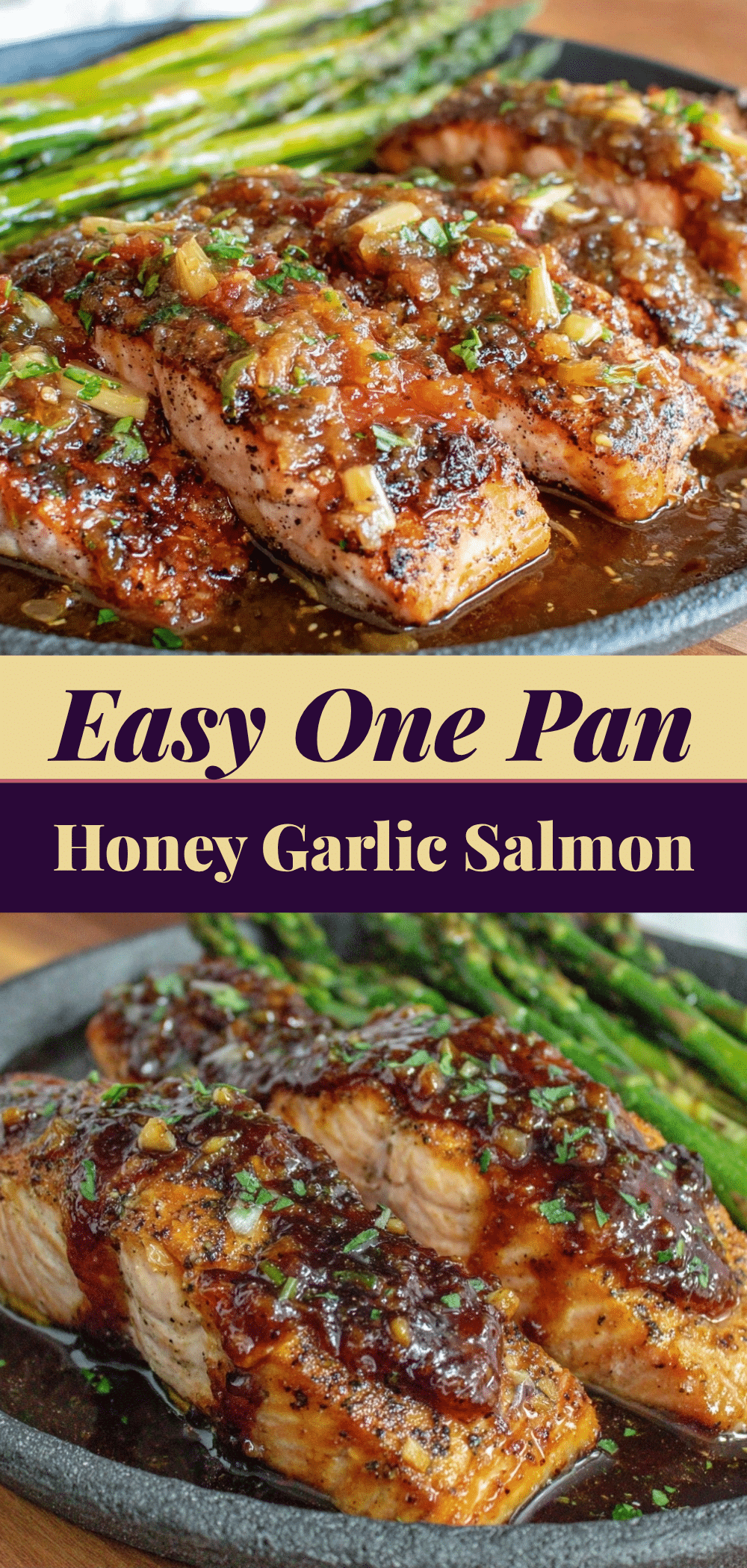
One-Pan Honey Garlic Salmon: Easy 5pm Dinner
- Total Time: 25 minutes
- Yield: 2 servings 1x
Description
A quick and healthy weeknight dinner featuring salmon and asparagus roasted on a single sheet pan with a sticky, savory-sweet honey garlic glaze. Ready in under 30 minutes with minimal cleanup.
Ingredients
- 2 large salmon fillets (6–8 oz each)
- 1 bunch asparagus (about 300g)
- 2 tablespoons olive oil
- Salt and black pepper
- 1/4 cup honey
- 2 tablespoons soy sauce (or tamari for gluten-free)
- 4 cloves garlic, minced
- 1 teaspoon fresh ginger, grated (or 1/2 teaspoon ground)
- 1 teaspoon rice vinegar
- 1/2 teaspoon red pepper flakes (optional)
- 1 teaspoon cornstarch mixed with 1 teaspoon cold water
Instructions
- Preheat oven to 400°F (200°C). Line a large baking sheet with parchment paper or foil and lightly grease.
- Wash asparagus, snap off woody ends, and cut in half if long. Pat salmon fillets dry with paper towels.
- Place salmon in the center of the baking sheet and arrange asparagus around the edges. Season salmon and asparagus with salt and pepper.
- In a small bowl, whisk together honey, soy sauce, minced garlic, grated ginger, rice vinegar, and red pepper flakes.
- Whisk the cornstarch slurry into the honey mixture.
- Brush half of the sauce over the salmon and the other half over the asparagus.
- Bake for 12-15 minutes until salmon flakes easily with a fork and asparagus is tender-crisp.
- Remove from oven and brush with remaining sauce. Let rest for 2 minutes before serving.
Notes
Pat the salmon dry before glazing to ensure the sauce sticks. Do not crowd the pan to allow for proper caramelization. Use fresh garlic for best flavor. If the sauce is too thin, broil for 1-2 minutes at the end to caramelize, watching closely to prevent burning.
- Prep Time: 10 minutes
- Cook Time: 15 minutes
- Category: Main Course
- Cuisine: Asian Fusion
Nutrition
- Serving Size: 1 salmon fillet and
- Calories: 380
- Sugar: 18
- Sodium: 600
- Fat: 18
- Saturated Fat: 3
- Carbohydrates: 22
- Fiber: 3
- Protein: 34
Keywords: honey garlic salmon, one pan dinner, quick weeknight meals, healthy salmon recipe, roasted asparagus, easy dinner, gluten-free option


