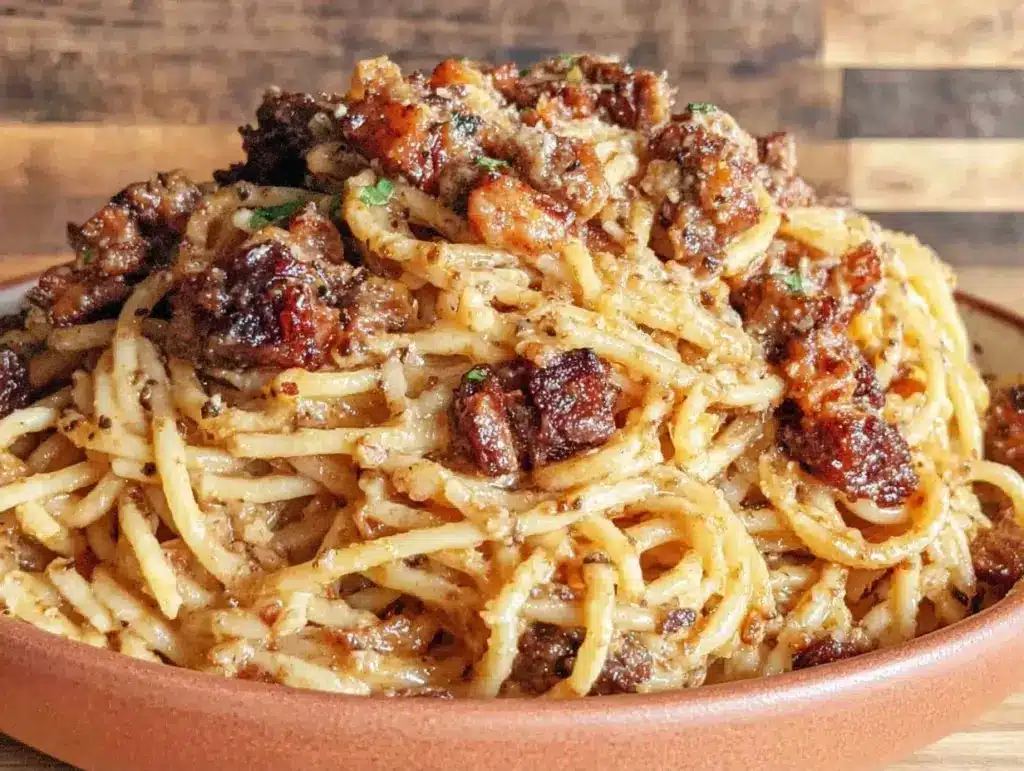
It was one of those Tuesdays where the kind of exhaustion settles into your bones that sleep doesn’t really fix. You know the feeling. Your brain feels like static, your shoulders are up by your ears, and the thought of making a decision—what to watch, what to wear, what to eat—feels like climbing a mountain. I stood in my kitchen, staring at the pantry, feeling completely drained. I didn’t want takeout. I didn’t want to order in and wait 45 minutes for cold food. I wanted something warm, something that smelled like comfort, and something that required zero emotional labor.
So I made the one dish I know by heart. Authentic Italian Carbonara. It’s not about following a rigid textbook; it’s about the ritual. The sound of the sizzling pancetta. The smell of garlic and cheese hitting hot pasta. It’s a dinner that asks you to slow down, even if just for 20 minutes. It’s gentle on the hands and heavy on the soul. After years of overthinking my meals, I realized that making this carbonara is my favorite way to take care of myself when the world gets too loud.
There’s a misconception that Italian food has to be complicated or that it requires a team of chefs. It doesn’t. This recipe is about simplicity, quality ingredients, and the quiet satisfaction of eating something you made with your own two hands. It’s creamy without cream, rich without guilt, and deeply satisfying. If you’re having a hard day, let this be your permission slip to do something kind for yourself. Let’s make dinner that feels like a hug.
Why You’ll Love This Gentle Carbonara
I’ve made this authentic Italian carbonara more times than I can count, usually on nights when I just need to breathe. It’s not just a recipe; it’s a reset button. Here’s why this specific version has become my go-to for self-care:
- It’s Quiet Cooking — There’s no chopping frenzy. No complex knife work. You’re just letting things simmer and mix. It’s meditative. I find myself just standing there, watching the pancetta crisp up, feeling my stress melt away.
- Minimal Cleanup — One pot for the pasta, one pan for the sauce. That’s it. When you’re tired, the thought of a sink full of dishes is the worst part of cooking. This keeps the mess to a minimum so you can relax.
- Deeply Satisfying — It uses guanciale or pancetta and Pecorino Romano, ingredients that pack a punch of flavor. You don’t need side dishes or fancy plating. It’s complete. You eat it, you feel full, you feel cared for.
- Fast Enough for Tired Nights — While I say it’s gentle, it’s also quick. From boiling water to first bite is about 20 minutes. It’s nourishing without being a project.
- Comfort in Every Bite — The sauce is silky, the pasta is chewy, and the saltiness of the pork is perfectly balanced by the sharp cheese. It tastes like home, even if you’re living alone.
This isn’t about impressing anyone. It’s about feeding yourself well. It’s the kind of meal that reminds you that you deserve to eat something good, even on the days you feel like you’re barely holding it together.
Ingredients You’ll Need for This Comforting Meal
One of the best things about authentic Italian carbonara is how few ingredients you need. You don’t need a grocery run. You likely have most of this already. The secret isn’t in the quantity; it’s in the quality. Since there are only a few components, each one matters.
The Base
Spaghetti or Rigatoni (1 pound / 450g) — I usually grab spaghetti because it’s classic, but rigatoni is great if you like the sauce to cling to the ridges. Look for bronze-die pasta if you can find it; it holds the sauce better. It’s a small detail that makes a big difference in texture.
Pancetta (8 ounces / 225g) — This is the star. Look for good quality, uncured pancetta. If you can’t find it, thick-cut bacon works, but pancetta is milder and less smoky, which is more traditional. Cut it into small cubes or strips. I like little crispy bits in every bite.
Egg Yolks (4 large yolks) — Yes, just yolks. The yolks are what make the sauce rich and creamy. I save the whites for a morning omelet or a chocolate toffee crunch layer cake glaze later. Using just yolks gives you that luxurious, custard-like texture without the risk of scrambling.
Pecorino Romano Cheese (1 cup / 100g, freshly grated) — This is the traditional cheese. It’s salty, sharp, and tangy. Don’t use pre-grated cheese; it has anti-caking agents that ruin the sauce. Grate it yourself while the pasta cooks. It takes two minutes and is worth every second.
The Flavor Builders
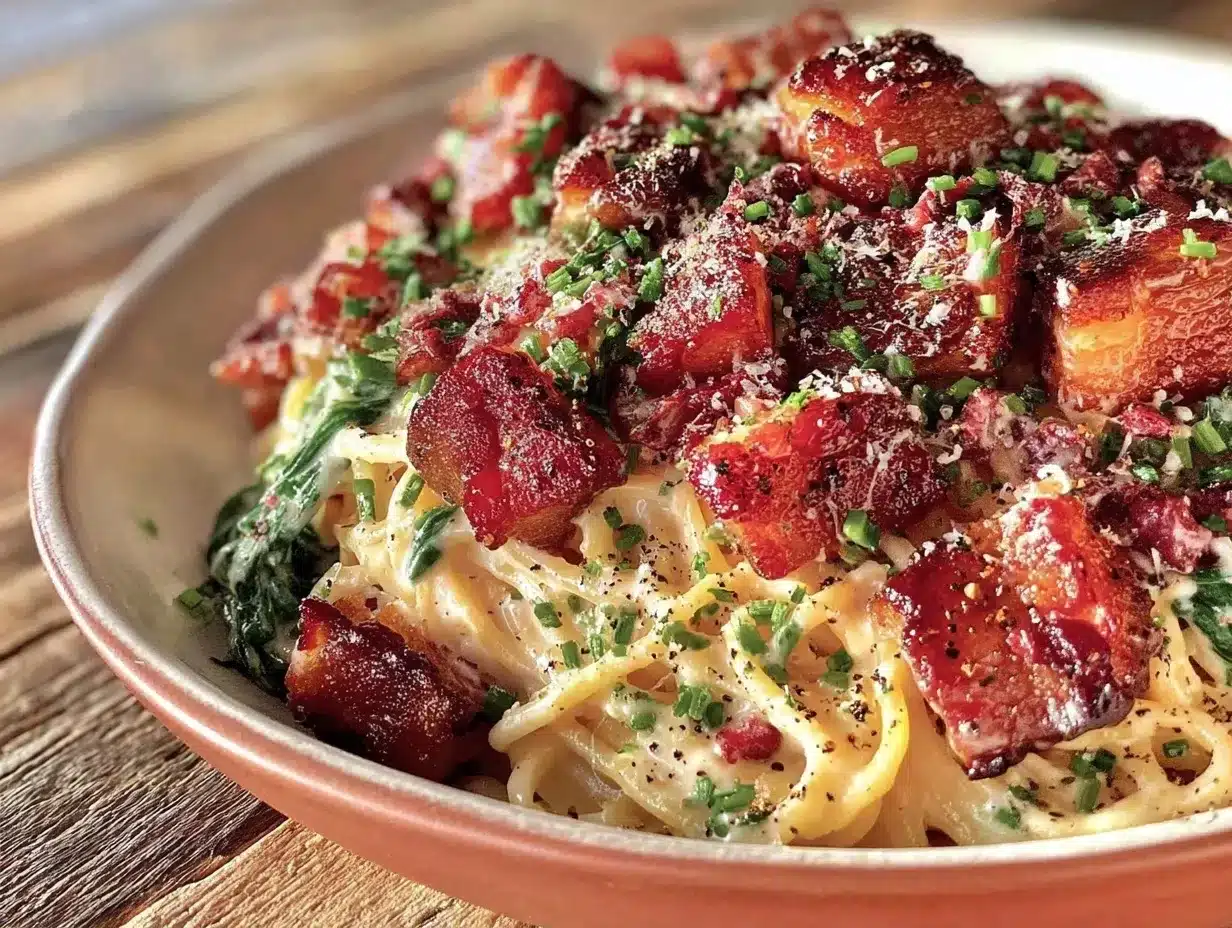
Black Pepper (2 teaspoons, freshly cracked) — Carbonara is basically “black pepper and cheese.” Use a good pepper mill. Crack it fresh. The heat and aroma are essential.
Garlic (2 cloves, smashed) — I don’t mince this. I smash the cloves and fry them in the pancetta fat, then remove them before mixing the sauce. It infuses the oil with a subtle garlic flavor without you getting big bites of garlic. It’s gentle and aromatic.
Salt (For the pasta water) — We’ll talk about how much later, but remember: the water should taste like the sea.
Optional: A splash of white wine — Some people deglaze the pan with a splash of white wine after cooking the pancetta. I do this sometimes for a little brightness, but it’s not strictly traditional. If you have a sparkling blackberry ginger mocktail on hand, you can enjoy that instead of wine for a relaxing evening.
Equipment You’ll Need
You don’t need fancy gadgets. Just a few basic tools.
Large skillet or Dutch oven — You need something wide enough to hold the pasta later. A 12-inch skillet is perfect. I use my cast iron because it holds heat well, which helps with the tempering process.
Large pot — For boiling the pasta. Anything that fits a pound of spaghetti comfortably.
Mixing bowl — Medium-sized. For whisking the eggs and cheese.
Whisk — Essential for creating a smooth emulsion with the eggs and cheese.
Tongs — For tossing the pasta. It’s easier than a fork.
Microplane or box grater — For the cheese. A microplane makes it super fine, which melts into the sauce beautifully.
How to Make It: Step-by-Step for Relaxation
Let’s walk through this together. There’s no rush. Take your time. Breathe.
Step 1: Prep the Cheese and Eggs (5 minutes)
While the water heats up, let’s get the sauce ready. In your mixing bowl, whisk the four egg yolks until they’re smooth and pale. Add the grated Pecorino Romano and 1 teaspoon of freshly cracked black pepper. Whisk it all together until it forms a thick, yellow paste. Set this aside. It will look dry now, but that’s okay. It’s going to transform.
Step 2: Cook the Pancetta (5-7 minutes)
Put your large skillet over medium heat. Add the diced pancetta. No oil needed—the pancetta will release its own fat. Cook it slowly, stirring occasionally. You want it to turn golden brown and crispy, but not burnt. This is where the magic happens. The kitchen will start to smell incredible. Add the smashed garlic cloves to the pan now. Let them fry for 30 seconds to infuse the fat, then remove them and discard them. You just want the flavor, not the crunch.
Step 3: Boil the Pasta (8-10 minutes)
Bring a large pot of water to a boil. Add a generous amount of salt—about 1 tablespoon. The water should taste salty. Add the pasta and cook according to the package directions, but take it out 1 minute before it’s fully al dente. The pasta will finish cooking in the sauce. Before you drain it, scoop out 1 cup of the starchy pasta water. This is your secret weapon. Set it aside.
Step 4: Temper the Eggs (2 minutes)
This is the most important step to avoid scrambling. Turn off the heat under the pancetta. Wait 30 seconds for the pan to cool slightly. Pour about ¼ cup of the hot pancetta fat into the egg and cheese mixture, whisking constantly. This gently warms the eggs so they don’t shock when they hit the hot pasta. If the pan is still too hot, wait a minute longer.
Step 5: Combine Everything (2 minutes)
Transfer the hot pasta directly into the skillet with the pancetta. Toss it well so every strand is coated in fat. Now, remove the skillet from the heat entirely. Let it sit for 10 seconds. Pour the egg and cheese mixture over the pasta. Add a splash of the reserved pasta water (start with 2 tablespoons). Toss vigorously and quickly. The residual heat will cook the eggs gently, creating a creamy, glossy sauce. If it looks too thick, add more pasta water, a tablespoon at a time. Keep tossing until it’s silky.
Step 6: Serve Immediately
Dive in. Serve it right away while it’s warm and creamy. Top with a little extra black pepper and maybe a few more pecorino shavings. It’s best eaten immediately, while the sauce is still soft and luxurious.
Expert Tips for Success
I’ve made this recipe dozens of times, and I’ve learned a few things that save the dish. Here’s how to make sure your carbonara is perfect every time.
- Heat Control is Key — The #1 mistake people make is adding the eggs to a hot pan. The pan must be off the heat. The residual heat is enough to cook the eggs gently. If the pan is too hot, you’ll get scrambled eggs in your pasta. Not what we want.
- Reserve the Pasta Water — Never skip this. The starch in the water helps bind the sauce to the pasta. It’s the difference between a dry, clumpy dish and a creamy, cohesive one. Add it gradually; you don’t need much.
- Use Freshly Grated Cheese — Pre-grated cheese is coated in cellulose, which prevents it from melting smoothly. It will make your sauce grainy. Take the extra two minutes to grate your own cheese. Your taste buds will thank you.
- Don’t Skimp on Pepper — Carbonara means “coal miner.” The black pepper is supposed to be visible and peppery. Crack it fresh and use a good amount. It cuts through the richness of the eggs and cheese.
- Work Quickly — Once you combine the eggs and pasta, move fast. Toss, toss, toss. The goal is to create an emulsion before the eggs set.
Variations and Substitutions
Once you master the base, you can play around. I like to keep it classic, but here are some ways to tweak it.
Guanciale Instead of Pancetta — If you can find guanciale (cured pork jowl), use it. It’s richer and has a more intense pork flavor. It’s the most traditional option. If you can’t find it, pancetta is the next best thing.
Extra Greens — Some people add sautéed spinach or kale. I don’t do this in the traditional version, but if you want to sneak in some veggies, wilt them into the pasta before adding the sauce. It adds a nice contrast.
Chicken Carbonara — If you want more protein, add diced cooked chicken. I sometimes use leftover rotisserie chicken. It’s not traditional, but it’s delicious and makes it more filling.
Vegetarian Option — You can skip the pork and use mushrooms. Sauté cremini mushrooms until browned, then proceed with the recipe. They mimic the texture and umami of the pancetta.
Serving and Storage
Carbonara is best eaten immediately. It doesn’t store well because the sauce can separate and become grainy when reheated. But if you have leftovers (which I doubt), here’s what to do.
Storage — Store leftovers in an airtight container in the fridge for up to 2 days. The pasta will absorb the sauce and become dry.
Reheating — To reheat, add a splash of hot water or milk to the pasta in a skillet over low heat. Stir gently to loosen the sauce. It won’t be as creamy as fresh, but it’ll still be good.
Serving Suggestions — I usually serve this with a simple green salad with a light vinaigrette. The acidity cuts through the richness of the carbonara. A crusty piece of bread is also nice for soaking up any extra sauce.
Nutrition Information
I’m not a nutritionist, but here’s a rough breakdown per serving (based on 4 servings).
| Nutrient | Amount |
|---|---|
| Calories | 580 |
| Protein | 22g |
| Carbs | 65g |
| Fat | 24g |
| Sodium | 650mg |
This is a rich dish. It’s high in calories and fat because of the eggs, cheese, and pork. But it’s also high in protein and satisfying. It’s comfort food, so enjoy it without guilt. Balance it with a light salad and some hydration.
Final Thoughts
Making authentic Italian carbonara is more than just cooking. It’s a moment of peace. It’s a reminder that you can create something beautiful with simple ingredients. It’s a way to nourish yourself when you’re running on empty.
So tonight, when you’re tired, don’t reach for the takeout menu. Take 20 minutes. Put on some soft music. Let the garlic sizzle. Whisk the eggs. Toss the pasta. And then, sit down and eat something you made. You deserve it.
If you try this recipe, I’d love to hear how it went. Did it help you unwind? Did your kitchen smell amazing? Drop a comment below and let me know. And if you’re looking for other gentle, comforting meals, check out my crispy bacon and egg breakfast tacos for a similar vibe in the morning.
Happy cooking, and be kind to yourself.
Frequently Asked Questions
Why did my carbonara turn into scrambled eggs?
This happens if the pan was too hot when you added the egg mixture. The key is to remove the pan from the heat completely and let it cool for a minute before adding the eggs. The residual heat is enough to cook them gently. If you’re worried, you can temper the eggs more by adding a bit more hot pasta water to the egg mixture before combining.
Can I use cream in carbonara?
Traditional authentic Italian carbonara does not use cream. The creaminess comes from the emulsion of eggs, cheese, and pasta water. Adding cream is a common non-Italian variation, but purists argue it dilutes the flavor. I stick to the traditional method because I love the pure, rich taste of eggs and cheese.
What is the difference between pancetta and guanciale?
Pancetta is cured pork belly, while guanciale is cured pork jowl. Guanciale has a higher fat content and a more intense, gamey flavor. It’s considered the most authentic ingredient for carbonara. However, pancetta is more widely available and still delicious. If you can’t find guanciale, pancetta is a great substitute.
Can I make this ahead of time?
Not really. Carbonara is best served immediately. The sauce continues to thicken as it cools, and the pasta can become mushy. If you’re cooking for guests, you can prep the ingredients (dice the pancetta, grate the cheese, whisk the eggs) ahead of time, but combine everything right before serving.
Is carbonara gluten-free?
The traditional recipe uses wheat pasta, so it’s not gluten-free. However, you can easily swap in your favorite gluten-free pasta. The sauce will still be creamy and delicious. Just be sure to check your pancetta label to ensure it doesn’t have added wheat starch.
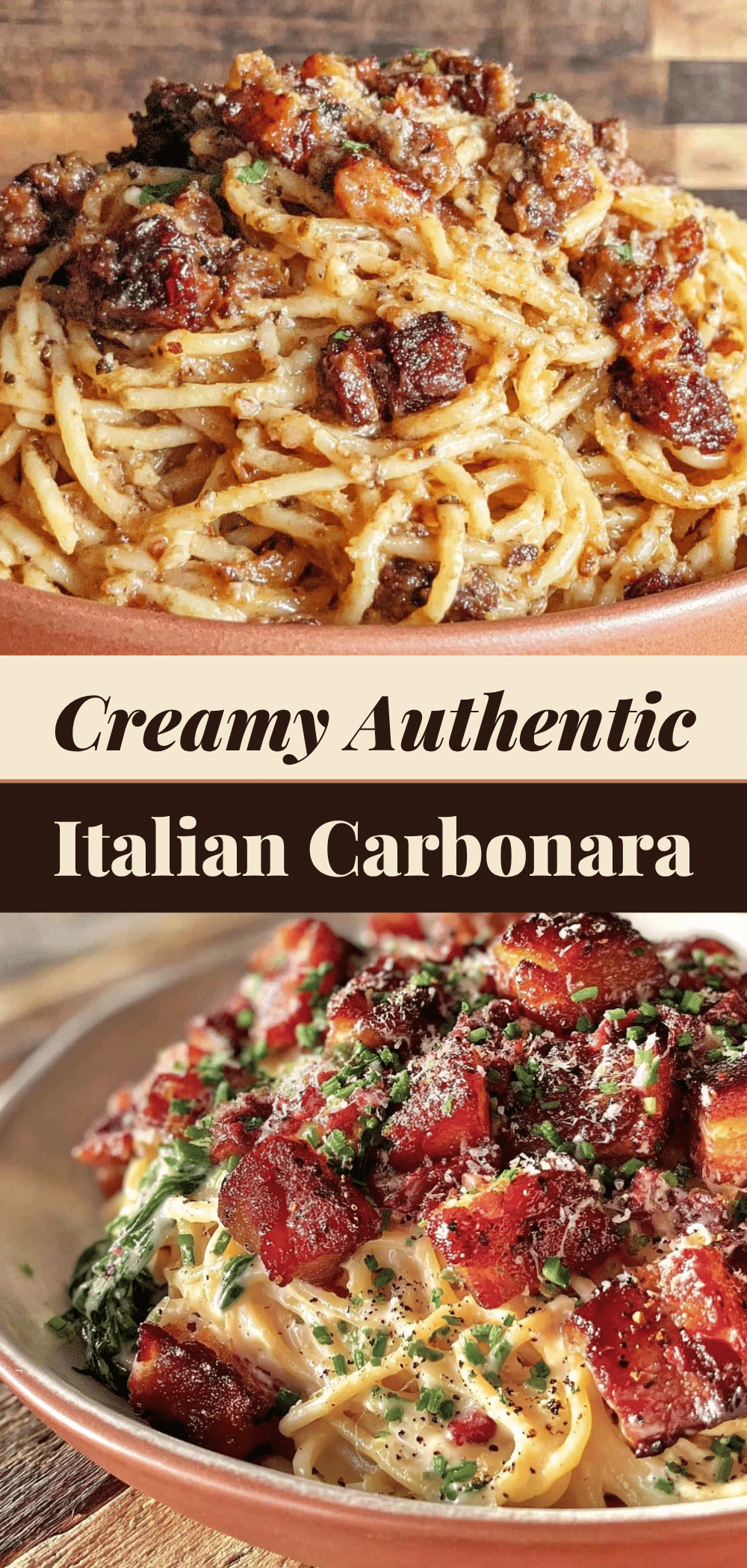
Pin This Recipe!
Authentic Italian Carbonara: Gentle Self-Care Dinner
- Total Time: 20 minutes
- Yield: 4 servings 1x
Description
A comforting, authentic Italian carbonara recipe designed for relaxation. This dish uses simple ingredients like guanciale or pancetta, egg yolks, and Pecorino Romano to create a creamy sauce without cream, perfect for a quiet, stress-free dinner.
Ingredients
- 1 pound (450g) Spaghetti or Rigatoni
- 8 ounces (225g) Pancetta (or Guanciale), cut into small cubes or strips
- 4 large Egg Yolks
- 1 cup (100g) Pecorino Romano Cheese, freshly grated
- 2 teaspoons Black Pepper, freshly cracked
- 2 cloves Garlic, smashed
- Salt (for pasta water)
- Optional: Splash of white wine
Instructions
- In a mixing bowl, whisk the four egg yolks until smooth and pale. Add the grated Pecorino Romano and 1 teaspoon of freshly cracked black pepper. Whisk until a thick, yellow paste forms. Set aside.
- Place a large skillet over medium heat. Add the diced pancetta (no oil needed). Cook slowly, stirring occasionally, until golden brown and crispy. Add smashed garlic cloves to the pan for 30 seconds to infuse the fat, then remove and discard the garlic.
- Bring a large pot of water to a boil. Add a generous amount of salt (about 1 tablespoon). Add pasta and cook until 1 minute before fully al dente. Before draining, scoop out 1 cup of starchy pasta water and set aside.
- Turn off the heat under the pancetta and wait 30 seconds for the pan to cool slightly. Pour about ¼ cup of the hot pancetta fat into the egg and cheese mixture, whisking constantly to temper the eggs.
- Transfer the hot pasta directly into the skillet with the pancetta. Toss well to coat. Remove the skillet from the heat entirely and let it sit for 10 seconds.
- Pour the egg and cheese mixture over the pasta. Add a splash of reserved pasta water (start with 2 tablespoons). Toss vigorously and quickly until the sauce is creamy and glossy. Add more pasta water if needed.
- Serve immediately, topped with extra black pepper and Pecorino Romano shavings.
Notes
The key to success is heat control. Always remove the pan from the heat before adding the egg mixture to prevent scrambling. Use freshly grated cheese, as pre-grated cheese contains anti-caking agents that ruin the sauce. Reserve pasta water; the starch helps bind the sauce. Carbonara is best eaten immediately and does not store well.
- Prep Time: 5 minutes
- Cook Time: 15 minutes
- Category: Main Course
- Cuisine: Italian
Nutrition
- Serving Size: 1 plate
- Calories: 580
- Sugar: 2
- Sodium: 650
- Fat: 24
- Saturated Fat: 10
- Carbohydrates: 65
- Fiber: 3
- Protein: 22
Keywords: Italian, Carbonara, Pasta, Comfort Food, Self-Care, Quick Dinner, Authentic, Guanciale, Pancetta, Egg Sauce


