It was one of those Tuesdays where the day felt like it had no end. You know the kind. The kind where you check your phone, close your laptop, and realize it’s already 7:30 PM. The fridge is humming louder than usual, and the idea of cooking feels less like a task and more like a hurdle I didn’t sign up for. I didn’t want heavy. I didn’t want complicated. I didn’t even want hot, really. I just wanted something that felt like a warm hug on a plate. Something that said, “You’ve had a long day, but you’re going to be okay.”
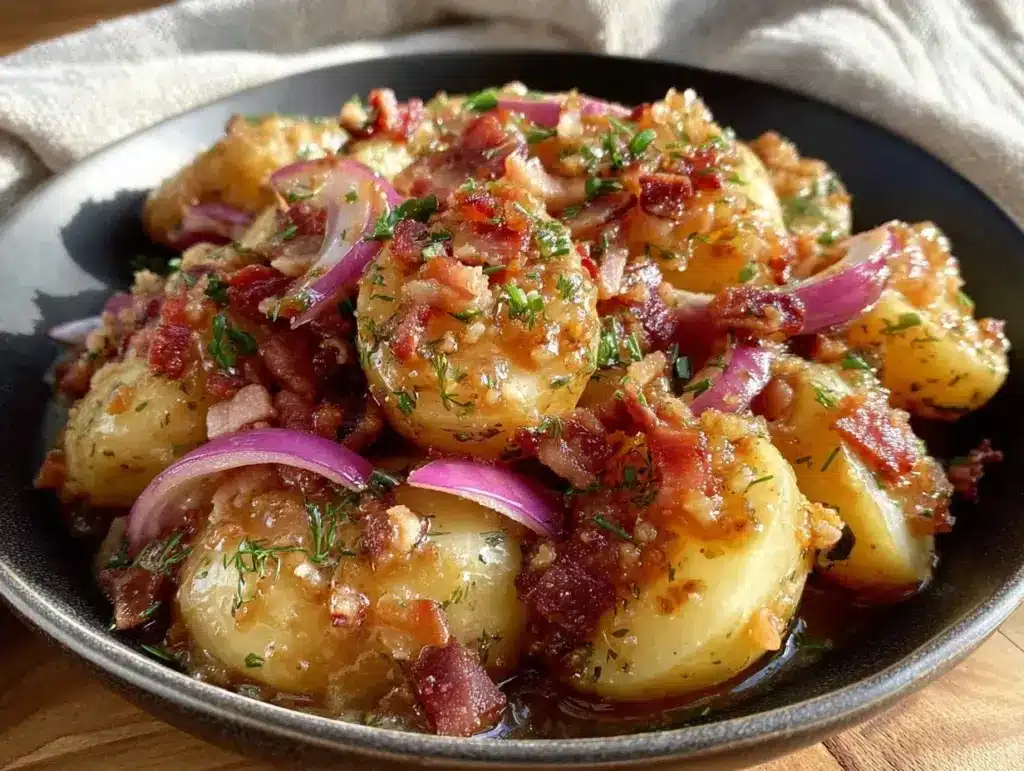
That’s when I decided to make this Oktoberfest German potato salad. Not the mayo-drenched, cold version I used to get at picnics, but the warm, vinaigrette-soaked kind that smells like caramelized onions and bacon. It’s the kind of dish that requires almost no attention once it’s started, which is exactly what I needed. I just sat on the counter, watching the onions soften, and actually breathed for the first time in six hours.
This isn’t just a side dish. It’s a reset button. It’s gentle comfort food that doesn’t weigh you down. It’s better than takeout because it’s made with ingredients that actually make sense, and it tastes like someone cared about your evening. If you’re reading this because you’re tired, stressed, or just need a moment of peace in your kitchen, this is the one to make when you need to take care of yourself.
Why You’ll Love This Recipe
There are a few reasons I keep coming back to this warm German potato salad, but honestly, it’s mostly because it feels like a small act of kindness to myself. Here’s why it works so well for those quiet, weary evenings:
Warm and Soothing — Most potato salads are served cold, which is great for a picnic but not so great when you’re shivering in the kitchen after a long day. This one is served warm, straight from the pan. The heat penetrates the potatoes, and that warm vinegar-bacon dressing feels incredibly grounding. It’s the opposite of cold and crisp; it’s soft and enveloping.
Minimal Cleanup — I’m talking one skillet and one bowl. That’s it. I don’t have the energy for a mountain of dishes after a hard day, and this recipe respects that. I can make it, eat it, and leave the pan to soak while I take a shower or just sit in silence. It’s efficient in the way that matters: it doesn’t drain your remaining energy.
Simple, Honest Ingredients — You don’t need fancy cheeses or rare spices. You need potatoes, bacon, onions, vinegar, and sugar. That’s it. It’s pantry-friendly and fridge-clearing. It uses up those sad-looking potatoes that have been sitting in the crisper drawer for a week. It turns neglect into nourishment.
Perfect for One (or Many) — I often make a smaller batch for just myself. The flavors are strong enough that it doesn’t feel like a “diet” meal, even if I’m eating alone. But it’s also easy to double if friends show up unexpectedly. It’s a flexible companion for whatever your evening looks like.
This recipe has become my answer to “I’m too tired to think.” It requires no chopping skills, no complex timing, and no pressure. It just works. And when it works, it feels like a small victory.
Ingredients You’ll Need
I’m particular about a few things here, but mostly because I’ve learned what makes the difference between “okay” and “oh, that’s nice.” You probably have most of this already. Here’s what you need to make this gentle, warm comfort.
The Potatoes
Yukon Gold potatoes (2 pounds / 900g) — This is non-negotiable for me. Yukon Golds are waxy enough to hold their shape but creamy enough to absorb that warm dressing. Russets fall apart too much, and red potatoes can be too firm. Yukon Golds are the sweet spot. If you can’t find them, a mix of Yukon and red works, but stick with waxy potatoes. Avoid russets unless you want mush.
The Dressing Base
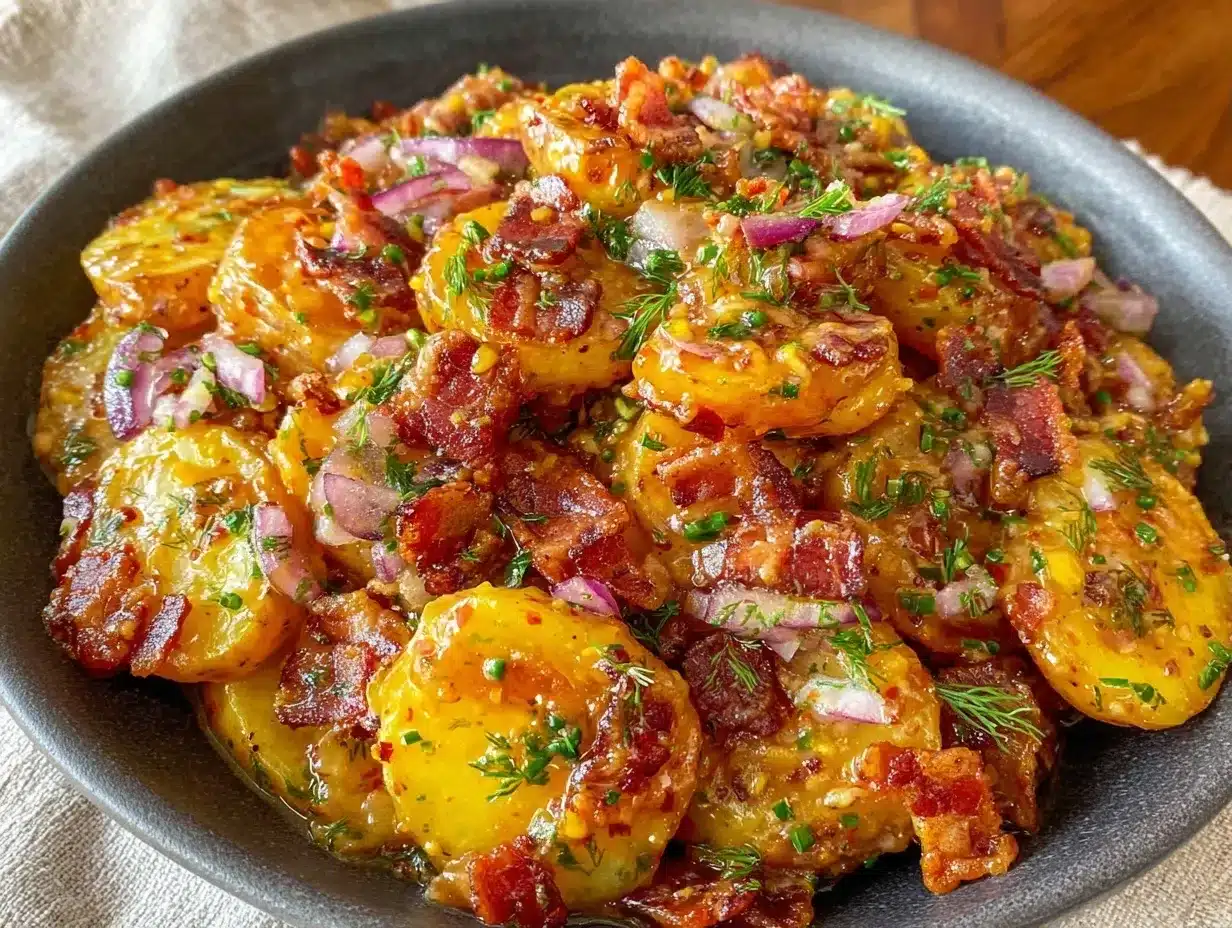
Bacon (6-8 slices / 150-200g) — This is where the flavor starts. I use thick-cut bacon because it renders more fat, and that fat is liquid gold for the onions. If you’re avoiding pork, you can use smoked sausage or just a good olive oil, but the bacon smokiness is the heart of this Oktoberfest vibe. It’s not just garnish; it’s the foundation.
Yellow onion (1 large / about 300g) — You need a lot of onion. It’s the other half of the flavor profile. I dice it small so it melts into the dressing. Sweet onions work too, but yellow gives a better bite that balances the sugar. Don’t rush this part. The onions need to caramelize.
Apple cider vinegar (½ cup / 120ml) — This is what makes it “German” style. It’s tangy and fruity, cutting through the richness of the bacon fat. Regular white vinegar is too harsh and one-dimensional. Apple cider vinegar adds depth. If you only have white vinegar, add a teaspoon of sugar to soften it, but apple cider is best.
Brown sugar (2 tablespoons / 25g) — You need a little sweetness to balance the vinegar. Brown sugar adds a molasses note that feels warmer than white sugar. It helps the dressing cling to the potatoes. Adjust to taste, but don’t skip it entirely, or it’ll be too sharp.
Water (½ cup / 120ml) — Just to help dissolve the sugar and dilute the vinegar slightly so it’s not overpowering. It creates a broth that the potatoes soak up.
The Seasoning
Dijon mustard (1 teaspoon) — Just a little. It adds a subtle heat and helps emulsify the dressing. You won’t taste it directly, but it rounds out the edges.
Salt and black pepper — To taste. The bacon and cheese (if you add it) are salty, so taste before adding extra salt. Freshly cracked black pepper is a must.
Optional: Fresh chives or parsley — For color and a fresh bite at the end. I usually skip this on tired nights, but if I’m feeling fancy, I chop some up. It makes it look like I tried.
Common Questions
Can I use pre-cooked bacon? — You can, but you lose the rendered bacon fat. The fat is essential for frying the onions. If you must, use olive oil and add a drop of liquid smoke for flavor.
Can I make this ahead? — Yes, and it actually tastes better the next day. The potatoes absorb more flavor as they sit. Reheat gently in the microwave or on the stove with a splash of water.
Equipment Needed
You don’t need fancy tools for this. In fact, I prefer simple gear because it’s easier to clean. Here’s what I actually use.
Large skillet or Dutch oven — I use a 12-inch cast iron skillet. It holds heat well and lets the onions brown nicely. A stainless steel skillet works too. Just make sure it’s big enough to hold the potatoes and dressing without splattering.
Medium pot — For boiling the potatoes. Any pot that holds 2 pounds of potatoes comfortably. I use my old stainless steel pot. It’s scratched and ugly, but it works.
Colander — For draining the potatoes. Or just tilt the pot carefully. I’m lazy, so I often just drain them right in the sink.
Wooden spoon — For stirring the onions and mixing the dressing. Silicone works too. Don’t use metal if you’re using non-stick.
Knife and cutting board — For dicing the potatoes and onions. A serrated knife helps with the potatoes if they’re waxy.
Measuring cups and spoons — Standard stuff. I eyeball the salt, but I measure the vinegar and sugar to keep the balance right.
Optional: Potato masher — Some people like to mash a few potatoes to thicken the dressing. I don’t, but if you like a creamier texture, mash about a quarter of the potatoes before adding the dressing.
How to Make It: Step-by-Step
Alright, let’s make this. I’m walking you through exactly how I do it, including the little tricks I’ve picked up over years of making this when I’m tired but still want something good.
Step 1: Prep the Potatoes (10 minutes)
Wash the potatoes thoroughly. You don’t need to peel them—the skin adds texture and nutrients. Cut them into bite-sized chunks, about 1-inch pieces. Try to keep them roughly the same size so they cook evenly. Put them in a medium pot and cover with cold water by an inch. Add a generous pinch of salt. This is important: salt the water, or the potatoes will taste bland inside.
Step 2: Boil the Potatoes (15-20 minutes)
Bring the pot to a boil over high heat, then reduce to a simmer. Cook until the potatoes are fork-tender but not mushy. This usually takes 15-20 minutes. Test with a fork; it should slide in easily. Once done, drain them in a colander. Shake them gently to let the steam escape. This helps them dry out slightly so they can absorb the dressing better. Set them aside.
Step 3: Render the Bacon (5 minutes)
While the potatoes boil, chop the bacon into small pieces. Place them in the large skillet over medium heat. Cook slowly, stirring occasionally, until the bacon is crispy and the fat has rendered out. This takes about 5-7 minutes. Don’t rush it. Low and slow gives you crispy bacon and clear, golden fat. Once crispy, remove the bacon with a slotted spoon and set aside on a paper towel. Leave the fat in the pan.
Step 4: Caramelize the Onions (8-10 minutes)
Add the diced onion to the hot bacon fat in the skillet. Reduce heat to medium-low. Cook slowly, stirring every few minutes, until the onions are soft, golden, and caramelized. This is the soul of the dish. It takes patience, but it’s worth it. The onions should be sweet and jammy, not brown and burnt. This step takes about 8-10 minutes. If they’re sticking, add a splash of water.
Step 5: Make the Dressing (2 minutes)
In a small bowl or measuring cup, whisk together the apple cider vinegar, brown sugar, Dijon mustard, salt, and pepper. Add the water. Whisk until the sugar is dissolved. You want a smooth, slightly thickened liquid.
Step 6: Combine Everything (3 minutes)
Pour the dressing mixture into the skillet with the onions and bacon fat. It will sizzle and steam. Let it simmer for 1 minute to meld the flavors. Then, add the drained potatoes to the skillet. Gently toss everything together, being careful not to break the potatoes. The potatoes will soak up the dressing like a sponge. Taste and adjust salt or sugar if needed.
Step 7: Finish and Serve
Stir in the crispy bacon bits. Serve warm. This is best served straight from the pan, maybe with a sprinkle of fresh chives if you have them. It’s humble, honest, and deeply satisfying.
Total Time: About 35-40 minutes (mostly hands-off boiling and simmering).
Expert Tips & Tricks
Here’s everything I’ve learned from making this dozens of times. These tips will save you from my mistakes.
Don’t Overcook the Potatoes — If they’re too soft, they’ll turn to mush when you toss them. They should be tender but hold their shape. Undercook slightly; they’ll finish absorbing the dressing.
Reserve the Bacon Fat — That fat is liquid flavor. Don’t drain it all out. You need it to fry the onions. If you use too little fat, the onions will steam instead of caramelize.
Caramelize Slowly — Rushing the onions gives you bitter, burnt bits. Low heat and patience give you sweet, jammy onions. It’s the difference between good and great.
Warm the Potatoes — If your potatoes are cold when you add them to the hot dressing, they won’t absorb it as well. Let them sit for a minute after draining, or microwave them briefly to warm them up.
Adjust the Sugar — Apple cider vinegar varies in sweetness. Taste the dressing before adding it to the potatoes. If it’s too sharp, add a bit more sugar. If it’s too sweet, add a splash more vinegar.
Common Mistakes
- Sauce is too thin: Let it simmer longer, or add a bit more sugar to help it thicken.
- Potatoes are dry: Add a splash of water or broth to the skillet and toss again.
- Too salty: Use unsalted butter or less bacon if you’re sensitive to salt. Rinse potatoes after boiling if they’re too salty.
Variations & Substitutions
Once you’ve nailed the basic version, here’s how you can mix it up. I’ve tried all of these.
Vegetarian Version — Skip the bacon. Use olive oil or vegan butter to fry the onions. Add smoked paprika to the dressing for a smoky flavor. It’s still delicious, just different.
With Sausage — Swap bacon for sliced smoked sausage or kielbasa. Cook it until browned, then proceed as usual. Adds a heartier meat flavor.
With Apples — Add diced apples with the onions. They caramelize nicely and add a sweet-tart contrast. Great for autumn.
Gluten-Free — This recipe is naturally gluten-free. Just check your vinegar and mustard labels to be sure.
Dairy-Free — Naturally dairy-free. No changes needed.
Lighter Version — Use turkey bacon and reduce the sugar by half. It’s still tasty, just lighter.
Serving & Storage
How to Serve: — I usually serve this straight from the skillet. It looks rustic and stays warm. It pairs well with grilled chicken, sausages, or just a slice of crusty bread. I don’t usually pair it with heavy sides; it’s substantial enough on its own.
Storage: — Store leftovers in an airtight container in the fridge for up to 4 days. The potatoes will absorb more dressing as they sit, so they might look drier. That’s normal.
Reheating: — Best method: Add to a skillet with a splash of water or broth over low heat. Stir until heated through. Microwave method: Heat in 30-second intervals, stirring between. Add a splash of water if it’s dry. It reheats well, actually tastes better the next day.
Freezing: — I don’t recommend freezing. The potatoes can become grainy when thawed. Make it fresh or store in the fridge.
Nutrition Information
I’m not a nutritionist, but here’s the breakdown if you’re tracking. Per serving (based on 6 servings):
- Calories: 280
- Protein: 8g
- Carbs: 35g
- Fiber: 3g
- Sugar: 6g
- Fat: 12g
- Saturated Fat: 4g
- Cholesterol: 15mg
- Sodium: 320mg
It’s moderate in calories, with good fiber from the potatoes and bacon protein. It’s not a diet food, but it’s not heavy either. It’s balanced comfort.
Final Thoughts
So that’s my Oktoberfest German potato salad. It’s simple, warm, and deeply satisfying. It’s the kind of recipe that reminds you that cooking can be a pause button, not a chore. When you’re tired, don’t reach for takeout. Reach for this. It’s gentle, it’s honest, and it’s made with care.
Make it yours. Add more onions if you like. Less sugar if you prefer tangy. The best recipes are the ones you adapt to your needs. If you make this, let me know how it goes. I’d love to hear if it became your new comfort food too.
Happy cooking. I hope your kitchen feels like a sanctuary tonight.
Frequently Asked Questions
Can I use russet potatoes?
You can, but they’ll fall apart more. Russets are starchy and fluffy, which is great for mashing but not for holding shape in a salad. Yukon Golds are best. If you use russets, undercook them slightly and handle them very gently.
Why is my salad too sour?
You probably used too much vinegar or not enough sugar. Apple cider vinegar is tart. Balance it with a bit more brown sugar or a pinch of salt. Next time, taste the dressing before adding it to the potatoes.
Can I make this ahead?
Yes, and it’s actually better the next day. The flavors meld and deepen. Store in the fridge and reheat gently. It’s perfect for meal prep if you like warm potato salad.
Is this recipe gluten-free?
Yes, naturally. Just ensure your vinegar and mustard are certified gluten-free if you’re sensitive.
Can I use white vinegar?
You can, but it’s harsher. Use less and add more sugar to balance it. Apple cider vinegar is preferred for its fruity, mellow flavor.
How do I reheat leftovers?
Add a splash of water or broth to a skillet and heat gently. Or microwave with a splash of water. It reheats well if you add moisture.
Can I double this recipe?
Yes. Use a larger skillet and double the ingredients. Cooking times are similar, but you might need to stir more often to prevent burning.
Pin This Recipe!
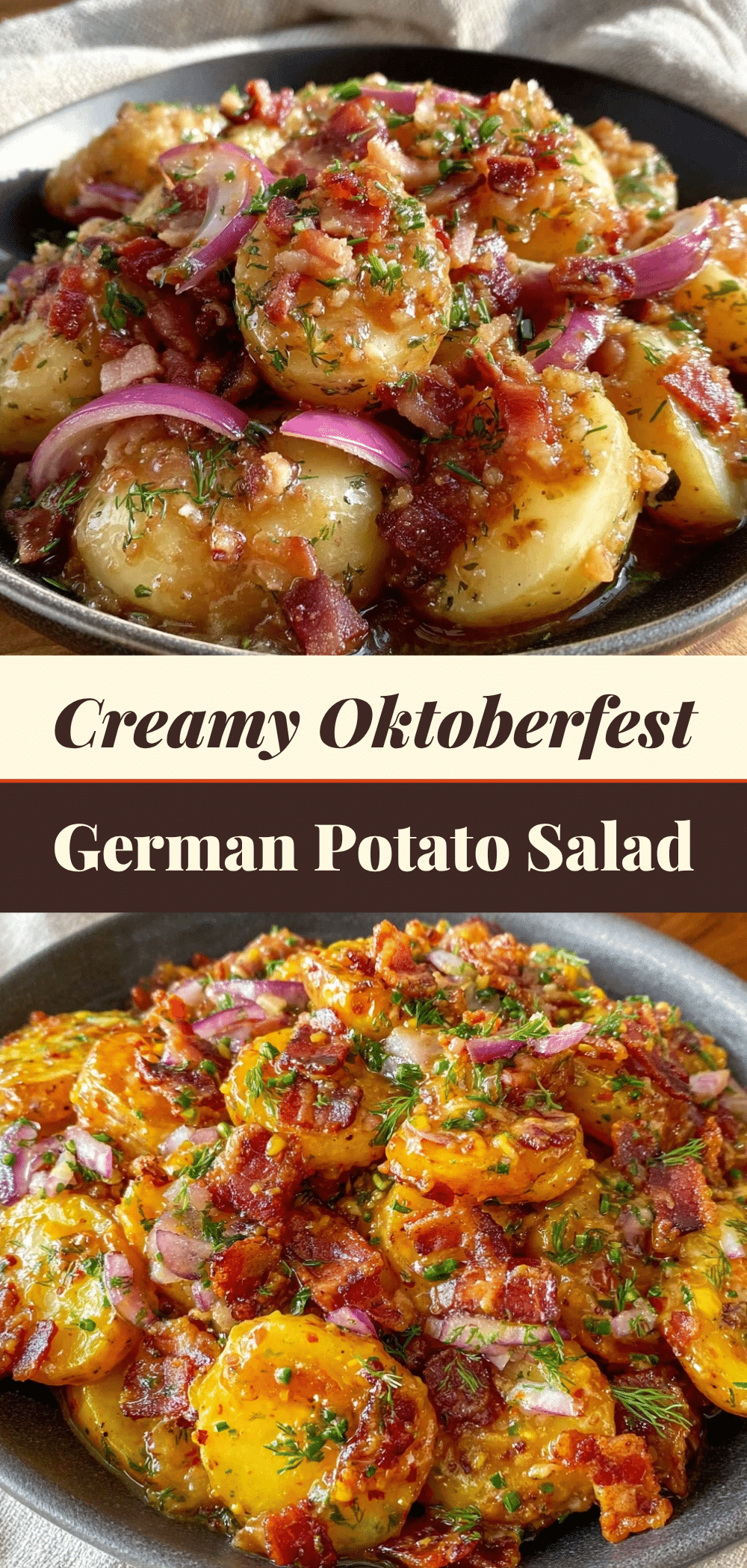

Oktoberfest German Potato Salad: Gentle Comfort for You
- Total Time: 35-40 minutes
- Yield: 6 servings 1x
Description
A warm, vinaigrette-soaked German potato salad with caramelized onions and bacon, designed as gentle comfort food that is easy to make and soothing to eat.
Ingredients
- 2 pounds Yukon Gold potatoes
- 6–8 slices thick-cut bacon
- 1 large yellow onion, diced
- 1/2 cup apple cider vinegar
- 2 tablespoons brown sugar
- 1/2 cup water
- 1 teaspoon Dijon mustard
- Salt and black pepper to taste
- Fresh chives or parsley (optional, for garnish)
Instructions
- Wash potatoes and cut into 1-inch chunks. Place in a medium pot, cover with cold water by an inch, add a generous pinch of salt, and bring to a boil.
- Reduce heat to a simmer and cook potatoes for 15-20 minutes until fork-tender but not mushy. Drain in a colander and set aside to steam dry slightly.
- While potatoes boil, chop bacon and cook in a large skillet over medium heat until crispy and fat is rendered (5-7 minutes). Remove bacon with a slotted spoon, leaving the fat in the pan.
- Add diced onion to the hot bacon fat. Reduce heat to medium-low and cook slowly for 8-10 minutes until soft, golden, and caramelized. Add a splash of water if sticking occurs.
- In a small bowl, whisk together apple cider vinegar, brown sugar, Dijon mustard, salt, pepper, and water until sugar is dissolved.
- Pour the dressing mixture into the skillet with the onions and bacon fat. Simmer for 1 minute to meld flavors.
- Add the drained potatoes to the skillet and gently toss to coat. The potatoes will absorb the dressing. Taste and adjust seasoning if needed.
- Stir in the crispy bacon bits. Serve warm, optionally garnished with fresh chives or parsley.
Notes
Use Yukon Gold potatoes as they hold their shape better than russets. Do not overcook the potatoes or they will turn to mush. Reserve the bacon fat for frying the onions as it adds essential flavor. The salad tastes better the next day as flavors meld. Do not freeze as potatoes become grainy.
- Prep Time: 10 minutes
- Cook Time: 25-30 minutes
- Category: Side Dish
- Cuisine: German
Nutrition
- Serving Size: 1 serving
- Calories: 280
- Sugar: 6
- Sodium: 320
- Fat: 12
- Saturated Fat: 4
- Carbohydrates: 35
- Fiber: 3
- Protein: 8
Keywords: German potato salad, Oktoberfest, warm potato salad, comfort food, bacon, caramelized onions, easy dinner, one skillet meal


